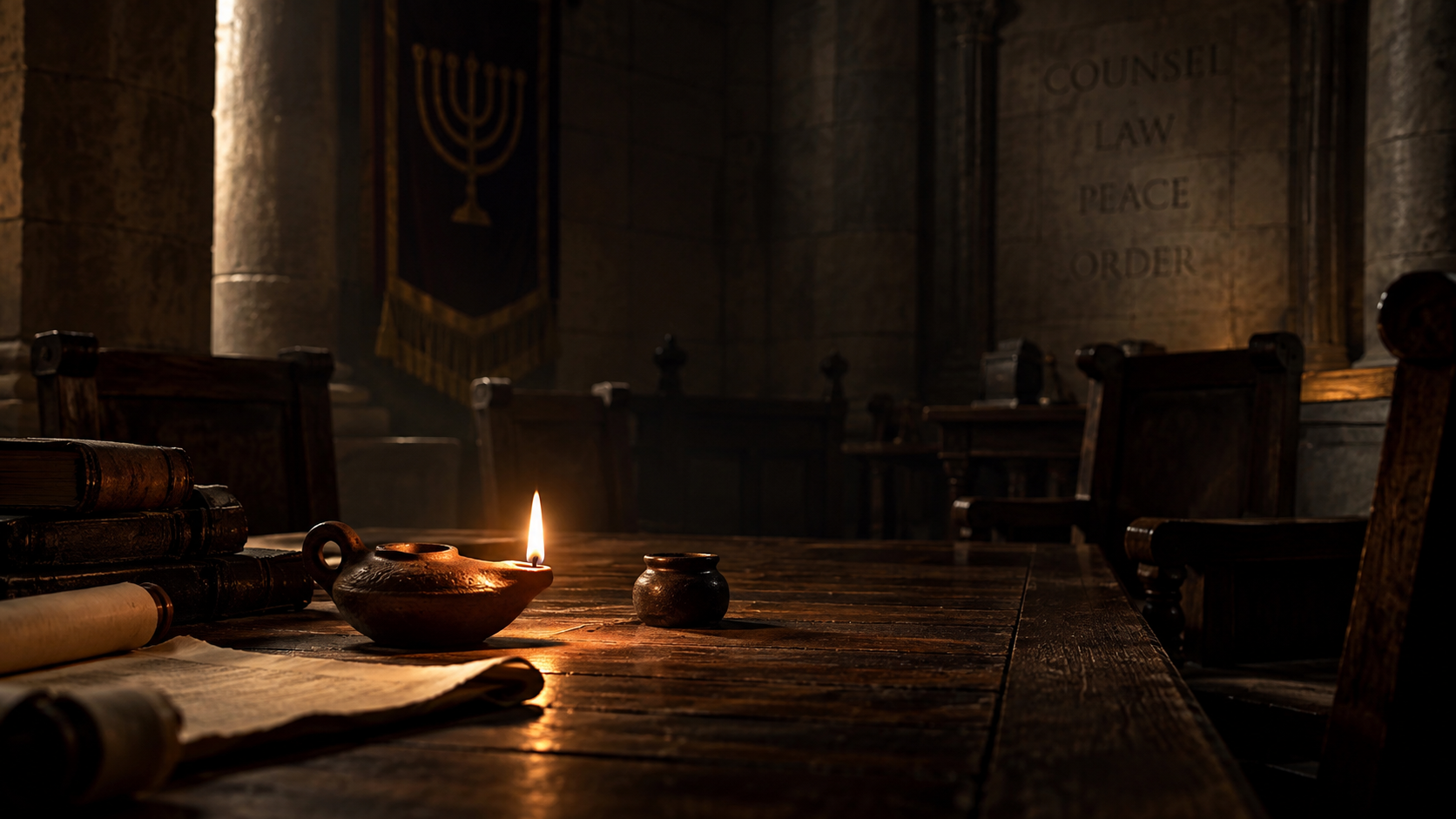
I think Joseph of Arimathea is a fascinating character. He was a respected member of the Jewish council, the Sanhedrin—the governing body that exercised significant religious and civil authority in Jerusalem during the days of Jesus. It included men from very different groups and perspectives, including Pharisees and Sadducees.
We’re not told exactly where Joseph fit within those groups, but Scripture does tell us something much more important about him: Joseph was a disciple of Jesus.
And that creates an interesting tension.
Joseph remained a member of the very council that would condemn Jesus to death. Luke tells us that he did not consent to their decision and action, and after Jesus died, Joseph boldly went to Pilate and asked for His body. Together with Nicodemus, he prepared Jesus’ body for burial and placed Him in his own new tomb.
But here’s the question I find fascinating:
How does a man like Joseph decide to stay?
Shouldn’t someone who wants to be faithful to Christ resign from a group that would become instrumental in His crucifixion? How could a faithful man continue working in such an unfaithful environment?
According to the passage we’ll investigate this Sunday, Joseph isn’t the only biblical character to find his calling close to the seat of power.
We’ll meet Obadiah, the man entrusted with overseeing the household of King Ahab. You might assume that someone trusted by Ahab would think like Ahab. Instead, Scripture tells us that “Obadiah feared the LORD greatly.”
We’ll learn that Obadiah has a lot more in common with people like Joseph in Egypt, Esther in Persia, and Joseph in Jerusalem. None of them were surrounded by people who shared their faith, yet God used each of them right where they were.
Sometimes faithfulness requires us to stand apart
Sometimes faithfulness requires us to speak up.
And sometimes, being faithful to God means being a faithful person in an unfaithful place.
 Pastor Jeremy Stephens
Leave a comment