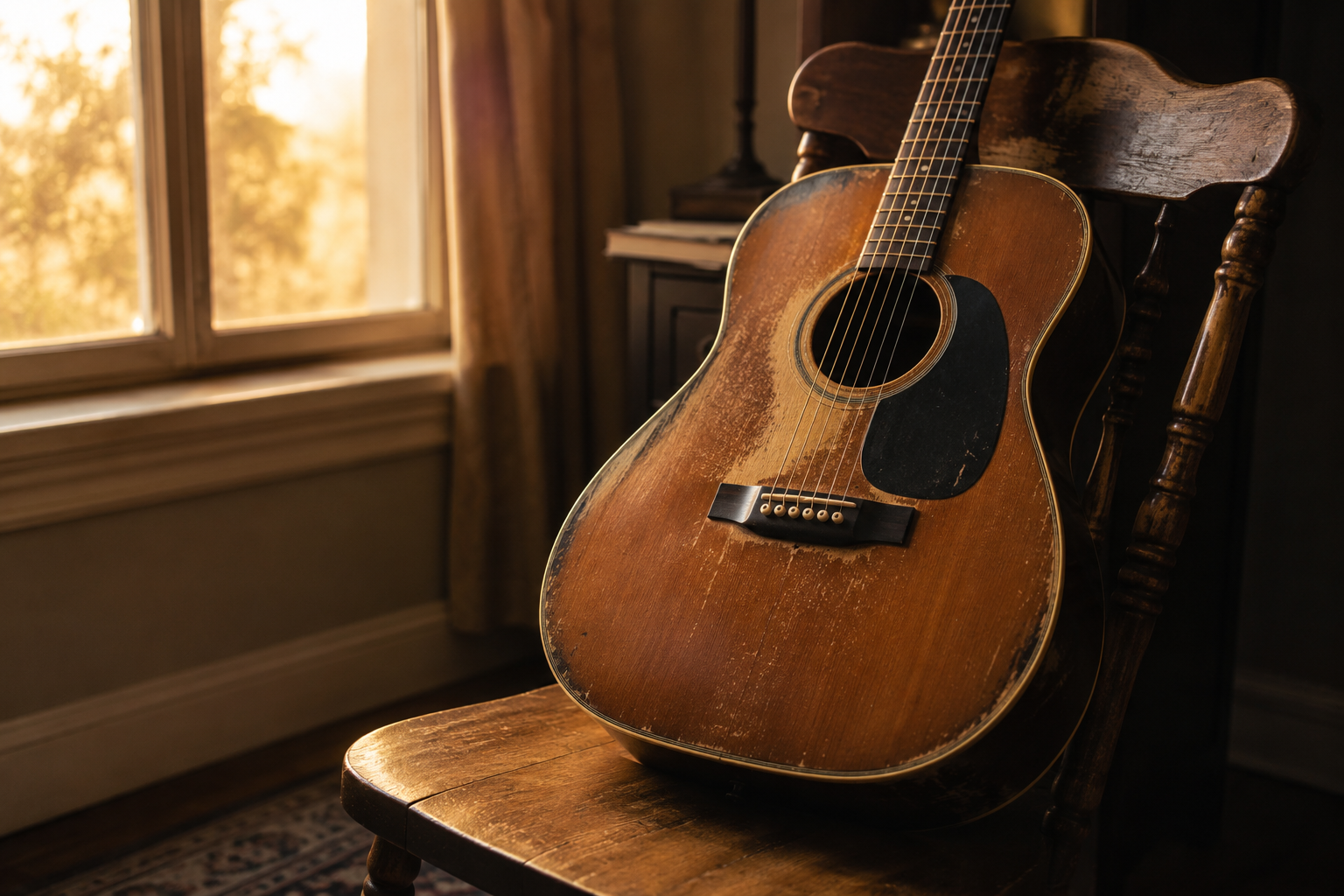
On my twelfth birthday, my parents gave me an unexpected gift. I don’t remember asking for a guitar, but that first acoustic delivered to me on that cold February evening turned into a lifelong obsession. I shudder to think of the time (and even more frighteningly, the money) I’ve spent on guitars over the last thirty years. I actually started doing the math recently before deciding it was better not to know!
In those early years, my parents paid for guitar lessons. Two of my teachers were so gifted that every lesson felt more like a private concert than a training time. One, a classical guitarist, would arrange three-part violin concertos into a single piece for guitar simply to sharpen his musicianship. Another had worked at Manny’s in The City and was buddies with Jimi Hendrix, Eric Clapton, and many of the other guitar greats who came through the city in the 60s and 70s. He was an extraordinary jazz player and spent decades mastering his craft.
As a young musician, I assumed that enough time, enough practice, and enough new gear would eventually make me one of those players. Every new guitar, every song I learned, and every concert I played added experience and confidence.
But something unexpected happened.
The longer I’ve played, the more I’ve realized just how wide the gap is between my abilities and those of true masters. Experience didn’t convince me of my greatness; it humbled me. The more I learned, the more I appreciated how much I still had to learn.
If you picked up a guitar for the first time today and we played together, you might feel intimidated. After all, I have years of experience and fingers hardened by calluses. But I know something you probably wouldn’t: all of my experience, all of my gear, and all of my accumulated knowledge fall infinitely short of perfection.
That realization provides a fitting doorway into Philippians 3.
The believers in Philippi were facing teachers who proudly displayed impressive religious credentials. They had the right heritage, the right traditions, and the right résumé. It would have been easy for these young Christians to wonder whether they somehow measured up.
Paul’s response is surprising. Rather than being impressed by religious accomplishments, he points to his own résumé and then shows why it could never provide true confidence before God. Heritage, knowledge, morality, and religious achievement are wonderful gifts, but they make terrible saviors.
The same temptation still exists today. We can easily begin placing our confidence in years spent in church, Bible knowledge, ministry experience, or family heritage. Yet anything that competes with Christ as the foundation of our identity will eventually disappoint us.
This Sunday, we’ll discover why Paul joyfully exchanged an impressive résumé for an even more impressive Savior—and why that’s still the only foundation that will stand.


Leave a comment