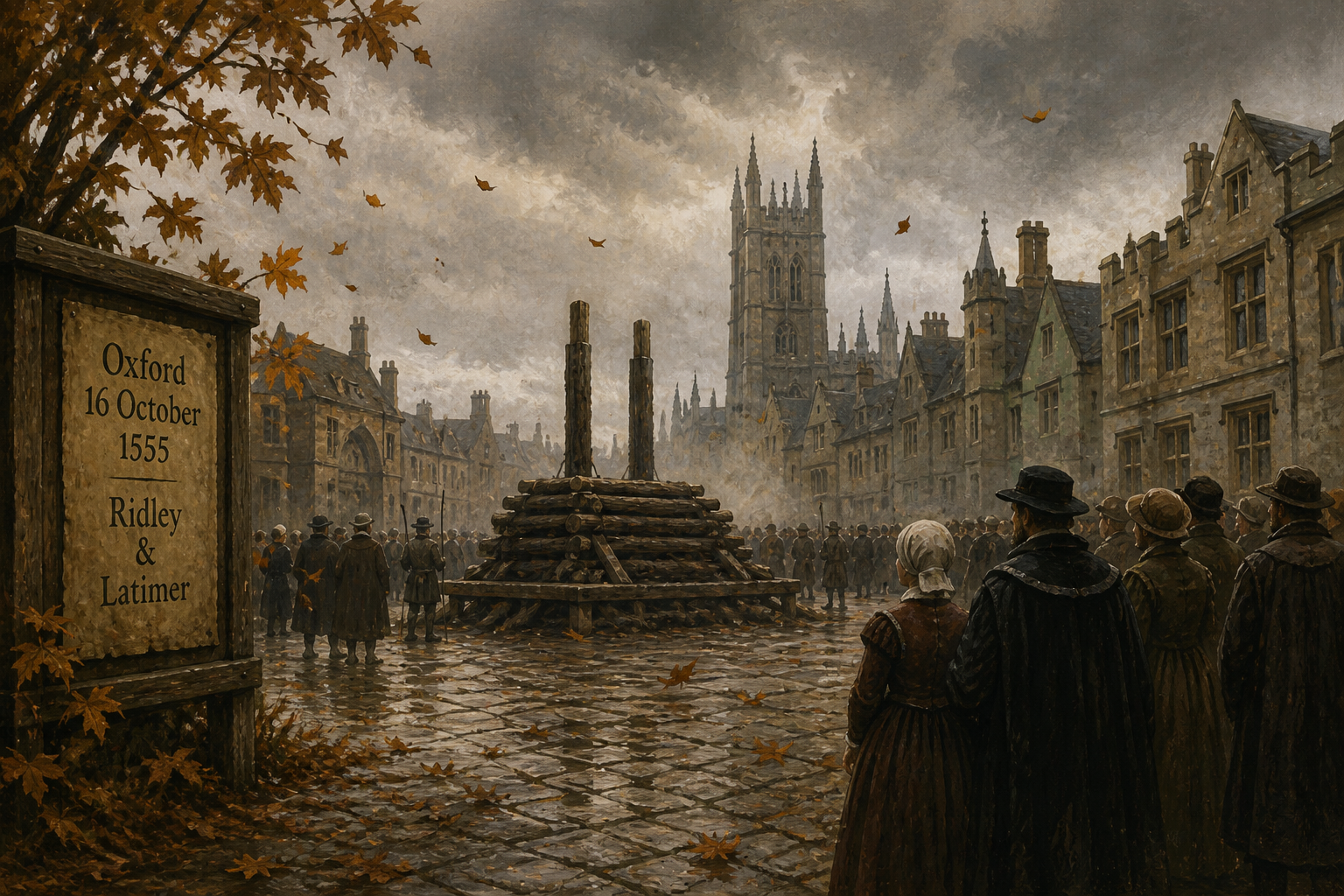
On a cold October day in 1555, two English pastors were led to the center of Oxford to be burned alive. The first, Nicholas Ridley, was the highly intellectual bishop of London. Disciplined and sharp, he was incredibly influential in shaping the Protestant reforms in England and played a key role in developing the English prayer book tradition.
Hugh Latimer, many years his senior, was a famous preacher who at one time had the privilege of preaching before King Henry VIII. He was known for his plainspoken yet forceful sermons.
By the year 1555, England had moved away from the reign of Protestant King Henry to the Catholic Mary I, whose violent response to England’s Protestantism earned her the name “Bloody Mary.” Ridley and Latimer were natural targets for her ire.
On October 16, 1555, the men were tied to stakes back-to-back in Oxford before a huge crowd. Their pending execution was designed to publicly humiliate the men and intimidate the Protestants into submission. The ultimate goal was to crush all reform teaching.
As the fire was prepared, Ridley understandably struggled emotionally. Then Latimer delivered one of the most famous lines in Protestant history:
“Be of good comfort, Master Ridley, and play the man. We shall this day light such a candle, by God’s grace, in England, as I trust shall never be put out.”
Latimer was right. Rather than destroying the Protestant movement, their deaths became fuel for the English Reformation.
What inspires someone to suffer like that for Christ? What has inspired generations of Christians to do the same? Paul tells us in just a few simple words: “To live is Christ, and to die is gain.” As we’ll see this week in Philippians 1:18b-26, Paul believed that when we have Christ, our accounts are maxed out. There’s nothing else to add. So he can sit in a prison cell and be content with the outcome of his trial, and countless martyrs can confidently face their future glory.
What else in this world can sustain a man in a prison cell…or at a stake?


Leave a comment