A few months ago I started working my way through some of the “Old Books.” With the enormous amount of literature, its hard to know where to start! G.K. Chesterton’s writings have influenced some of the great thinkers of the 20th century, so I wanted to be sure to spend some time with him. I’ve found him to be fantastically engaging. H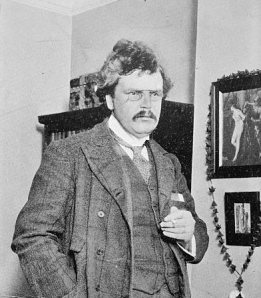 e has an artistry with language that makes it readable, yet thoroughly deep and thought-provoking. Here’s a passage I’ve been thinking on today:
The Everlasting Man
They took the body down from the cross and one of the few rich men among the first Christians obtained permission to bury it in a rock tomb in his garden; the Romans setting a military guard lest there should be some riot and attempt to recover the body. There was once more a natural symbolism in these natural proceedings; it was well that the tomb should be sealed with all the secrecy of ancient eastern sepulture and guarded by the authority of the Caesars. For in that second cavern the whole of that great and glorious humanity which we call antiquity was gathered up and covered over; and in that place it was buried. It was the end of a very great thing called human history; the history that was merely human. The mythologies and the philosophies were buried there, the gods and the heroes and the sages. In the great Roman phrase, they had lived. But as they could only live, so they could only die and they were dead.
On the third day the friends of Christ coming at daybreak to the place found the grave empty and the stone rolled away. In varying ways they realized the new wonder; but even they hardly realized that the world had died in the night. What they were looking at was the first day of a new creation, with a new heaven and a new earth; and in a semblance of the gardener God walked again in the garden, in the cool not of the evening but the dawn.
I love the poetry of this passage. There’s something special about reading the thoughts of Godly people who lived long before we did. It ties us into the historical nature of our faith. Which of the “old books” authors have influenced your thinking?
 Pastor Jeremy Stephens
Leave a comment